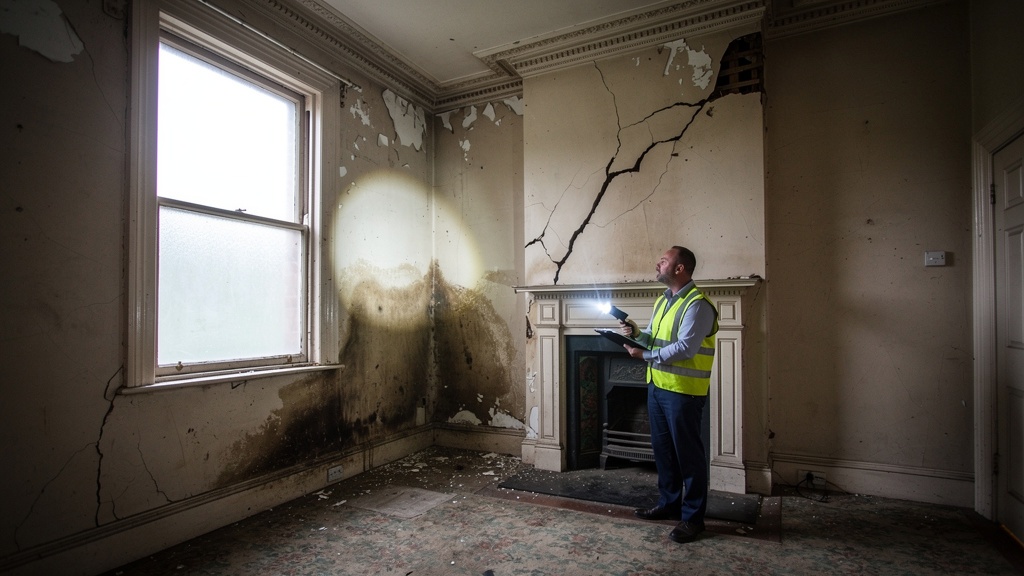
Of all the potential problems a property surveyor can identify, subsidence tends to generate more anxiety than almost anything else. And understandably so — subsidence can be expensive to remedy, can affect your ability to get a mortgage, and can have a significant impact on a property's value. But in my experience, subsidence is also one of the most frequently misdiagnosed and over-feared issues in North London property.
Not all cracking means subsidence. Not all movement is structural. In this guide, I'll explain what subsidence actually is, why parts of Barnet and North London are particularly at risk, what to look for, and — crucially — what to do if subsidence is identified.
What Is Subsidence?
Subsidence is the downward movement of the ground beneath a building, which causes the foundations to sink unevenly. This leads to structural movement — typically visible as cracking in the walls, floors and ceilings. It's distinct from settlement (which is the gradual, uniform compression of soil under a new building's weight — normal and expected) and from heave (upward movement of the ground, often caused by trees being removed).
True subsidence is relatively uncommon — but in North London, it's more prevalent than the national average, for reasons I'll explain below.
Why Is North London at Higher Subsidence Risk?
Several factors make parts of Barnet and the wider North London area more susceptible to subsidence:
London Clay
Much of North London is underlain by London Clay — a shrinkable clay that swells when wet and shrinks when dry. During extended dry periods (particularly dry summers), the clay can shrink significantly, causing the ground to drop and potentially affecting shallow foundations. This is called "clay shrinkage" or "volumetric shrinkage" and is a primary cause of subsidence in Barnet.
Trees
Trees — particularly mature oaks, poplars, willows and elms — remove enormous quantities of moisture from the soil during summer. This dries out the clay and causes localised shrinkage near the roots. Victorian properties in leafy North London streets are particularly vulnerable. Conversely, removing a large tree (or tree death) can cause the clay to re-swell, leading to heave rather than subsidence.
Drainage Leaks
Leaking underground drainage can wash away fine particles of soil beneath foundations (a process called "washing out"), creating voids that allow foundation movement. This is particularly common in Victorian properties with ageing clay drainage systems.
Shallow Victorian Foundations
Victorian buildings were typically built with shallow strip foundations — often just 600–900mm deep. Modern regulations require foundations of 1m+ in clay soils. Shallow foundations are more susceptible to clay shrinkage and tree root influence.
How to Spot Subsidence: The Warning Signs
Not all cracking indicates subsidence — and distinguishing subsidence cracking from normal thermal and settlement cracking is one of the most important skills a building surveyor brings to a property inspection. Here's what to look for:
Likely Subsidence
- Diagonal cracks wider than 5mm, tapering from bottom to top
- Cracks that go through masonry (rather than mortar joints)
- Doors or windows sticking on one side due to frame distortion
- Cracks that have recently appeared or visibly grown
- Localised to one part of the building near trees
Likely NOT Subsidence
- Fine hairline cracks in plaster throughout
- Horizontal cracks in mortar joints (thermal movement)
- Cracks at corners of windows and doors (normal shrinkage)
- Stable historic cracking that has been filled multiple times
- Widespread minor cracking across all walls
What Does a Surveyor Do When They Suspect Subsidence?
When I identify cracking that may be indicative of subsidence during a Level 3 Building Survey, the approach depends on the severity and nature of the evidence:
- Monitoring: For stable historic cracking, I'll assess whether it's active or historic, and may recommend installing tell-tales (crack monitors) to establish whether movement is ongoing.
- Structural engineer referral: Where I identify significant or active cracking, I'll recommend a structural engineer's assessment before exchange. A structural engineer can provide a more detailed assessment of the cause and extent of movement.
- Drainage investigation: Where drainage issues may be contributing to foundation movement, a CCTV drainage survey may be recommended.
- Insurance history: I'll recommend you or your solicitor request the property's insurance claims history — a previous subsidence claim is a red flag.
Case Study: "Is This Subsidence?" — A Finchley Buyer's Story
A client came to us having viewed a Victorian semi in Finchley. The estate agent had told them the diagonal cracks visible in the rear reception room were "just settlement — all old houses have them." They wanted a proper opinion.
Our Level 3 Building Survey identified that the cracking pattern — running diagonally from the top corners of the rear window openings, with displacement across the crack face — was consistent with differential settlement in the rear extension. The extension had been built without adequate foundations onto clay ground close to a large oak tree. The cracking appeared active (evidenced by fresh dust in the crack and staining).
We recommended a structural engineer's report. The engineer confirmed movement was ongoing and recommended underpinning of the extension foundations — at an estimated cost of £15,000–£25,000. The buyers renegotiated and secured a £20,000 reduction. Without the survey, they would have inherited a very expensive problem they knew nothing about.
Can You Get a Mortgage on a Property with Subsidence?
It depends on the nature and status of the subsidence. Historic, remediated subsidence — where underpinning has been carried out and the property has been stable for many years — is generally mortgageable, though some lenders will decline. Active or unresolved subsidence is a different matter and most lenders will refuse to lend until the issue is resolved.
Buildings insurance for properties with subsidence history can also be more difficult to obtain and more expensive. This is a material fact you need to understand before exchanging contracts.
Frequently Asked Questions
What does subsidence repair involve?
For shrinkable clay soils, the most common solution is underpinning — deepening the foundations below the zone of clay shrinkage. Modern alternatives include resin injection. Costs range from £10,000 for a simple localised issue to £50,000+ for extensive underpinning. Removing the cause — typically the tree responsible — plus monitoring is sometimes sufficient for borderline cases.
Should I walk away from a property with subsidence?
Not necessarily. Historic, fully remediated subsidence with a clear insurance history is not automatically a deal-breaker. The key is to understand exactly what you're taking on — the cause, whether it's resolved, the repair history and the current condition. A Level 3 survey plus structural engineer's report will give you the information you need to make an informed decision.
Are all cracks signs of subsidence?
No — the vast majority of cracks in older properties are the result of normal thermal movement, shrinkage, or minor settlement and are nothing to be concerned about. The type, size, pattern and location of the cracking are all important factors in diagnosis. This is why it's so important to use a qualified, experienced RICS surveyor.
Which areas of Barnet are most at risk of subsidence?
The clay-rich soils of much of the London Borough of Barnet — particularly in Totteridge, Whetstone, New Barnet and parts of Finchley — present elevated subsidence risk compared to the national average. Tree-lined Victorian streets in these areas merit particular attention. Check the British Geological Survey's GeoIndex for an assessment of shrinkable clay risk for specific locations.
Can a building survey identify subsidence?
A Level 3 Building Survey will identify the visible signs of potential subsidence and assess the probability and implications. However, a surveyor is not a structural engineer — where significant movement is identified, we will recommend a specialist structural engineer's investigation as a follow-up.
Book a Building Survey in Barnet
Concerned about cracking or movement in a property you're considering buying in Barnet? Our RICS-qualified surveyors will carry out a thorough inspection and give you a clear, honest assessment. We cover all areas across Barnet and North London. Contact us via our enquiry form to get started.
Book Your Level 3 Building Survey
Don't buy blind. Commission a thorough survey from RICS surveyors who know Barnet's properties inside out.
Get a Quote